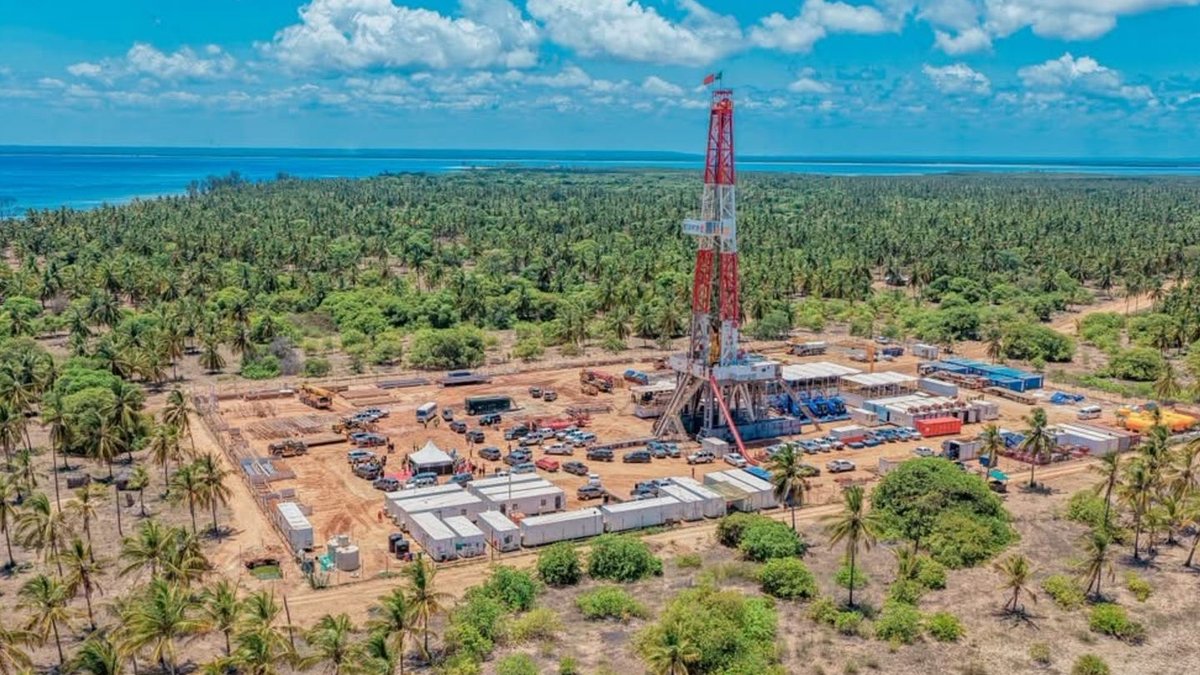
Tanzania has discovered an estimated 223 billion cubic feet of natural gas at the Mnazi Bay field in the Mtwara Region, marking a significant expansion of its offshore petroleum resources. The government announced the find in late October, with production already contributing to the country’s electricity supply and industrial needs.
The discovery follows the signing of four new petroleum exploration licenses for the Tanzania Petroleum Development Corporation (TPDC), covering areas including Eyasi-Wembere, Lindi–Mtwara, West Songo Songo, and Mnazi Bay North. These licenses aim to deepen geological knowledge and identify further commercially viable reserves, supporting Tanzania’s push for energy security and industrial growth.
Tanzania’s total proven natural gas reserves stand at 57.54 trillion cubic feet, with 47.13 trillion located offshore and 10.41 trillion onshore. The Mnazi Bay field alone is expected to produce 30 million cubic feet per day for at least a decade, with additional wells boosting output to over 65 million cubic feet daily. By October, production had already reached 130 million cubic feet per day, primarily supplying power plants in Mtwara and Dar es Salaam.
According to the Energy Minister, more than 80 percent of gas produced at Mnazi Bay is used for electricity generation through Tanzania Electric Supply Company facilities in Mtwara and Dar es Salaam, highlighting the field’s importance to the national electricity supply.
The government is also advancing the approximately 35-kilometre pipeline connecting the Ntorya gas field to the Madimba processing facility, with construction reported to have reached 74 percent completion. The project is expected to facilitate additional gas supplies for electricity generation, industries and other domestic users.
Read Also: Dangote’s $2.5bn Fuel Hub Transforms Southern Africa’s Energy
Beyond power generation, natural gas consumption is diversifying. By September 2026, Tanzania had established 22 compressed natural gas (CNG) filling stations, 20 vehicle conversion workshops, and connections for six industries, 21 institutions, and 5,000 households. The government is now seeking private investment to develop small-scale liquefied natural gas (LNG) projects, with discussions ongoing for proposals in the Mtwara Region.
The expansion of petroleum activities is creating local economic opportunities. The Mnazi Bay drilling program has employed approximately 200 Tanzanians, while 35 contracts worth over TZS 20 billion have been awarded to locally owned businesses. TPDC increased its participating interest in the Mnazi Bay venture from 20 percent to 40 percent in 2024, with Maurel & Prom retaining 60 percent. The increased stake is expected to strengthen the government’s participation in project decisions and potential earnings from gas production.
The latest developments align with Tanzania’s broader energy strategy under Development Vision 2050, which prioritizes infrastructure expansion, industrial capacity building, and sustainable resource management. Future production and investment will depend on exploration results, commercial viability, financing, and the availability of infrastructure to deliver gas to domestic and regional markets.
The Petroleum Upstream Regulatory Authority has welcomed the licensing program, emphasizing compliance with environmental regulations and encouraging greater participation by Tanzanian companies and professionals. The authority will oversee exploration activities while ensuring adherence to petroleum legislation, environmental requirements, and licence conditions.


