Venezuelan interim authorities have granted NABEP, a U.S.-backed oil firm, 100-year concessions for 17 oil fields with proven reserves of about 65 billion barrels, the White House said on Monday.
NABEP is the second-largest private oil producer in Venezuela, and the company has granted the U.S. Department of War’s Office of Strategic Capital an equity stake of 35% in its corporate parent.
Deal Details
According to the White House, this equity stake represents up to “hundreds of billions in value and dividends for the United States.” The U.S. had about 46 billion barrels in proven oil reserves as of end-2024, according to official figures.
President Donald Trump announced a deal with Caracas that would give the U.S. majority control over 65 billion barrels, or about 20% of the South American nation’s massive oil reserves.
U.S. Government Rights
In a fact sheet published Monday evening, the U.S. government said it would enjoy the right to purchase, at production cost, a guaranteed 20% of the off-take from all current and future fields NABEP will operate.
The U.S. government also has the “right of first refusal” to purchase the remaining 80% of NABEP’s production, making Washington the prioritized buyer for its energy reserves.
Related: Stocks Making Big Midday Moves: Moderna, Robinhood, Coinbase & More
However, analysts remain skeptical that the landmark oil deal could meaningfully boost the U.S. energy production and bring down gas prices for Americans in the near term.
Challenges Ahead
Huge investments are needed to extract the rich resources in Venezuela, whose oil output remains at a fraction of its capacity due to decades of mismanagement, lack of investment, and sanctions.
NABEP also planned to invest up to $100 billion in new oil infrastructure in Venezuela to scale production, the White House said.
Under the agreement, the company is expected to pay $200 billion in royalty and tax payments to Venezuelan governments over the first 25 years.
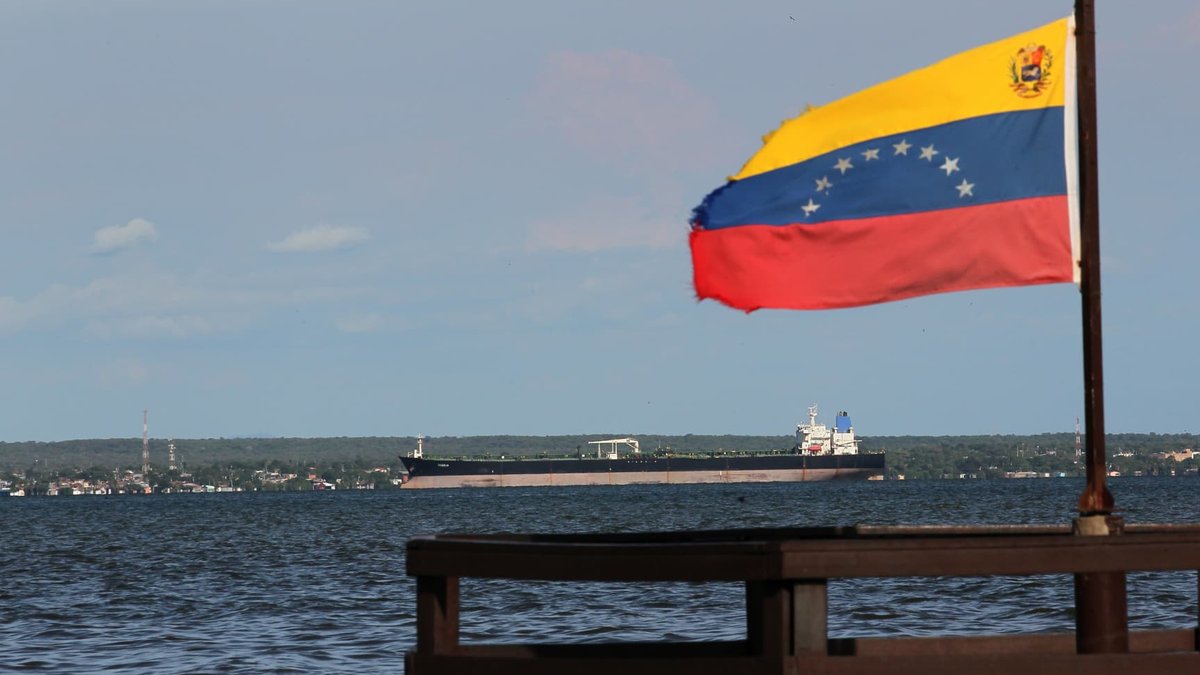
The Venezuelan flag waves in front of an oil tanker on a lake in Maracaibo, Venezuela, a symbol of the country’s rich oil reserves and the potential for increased production under this new deal.


