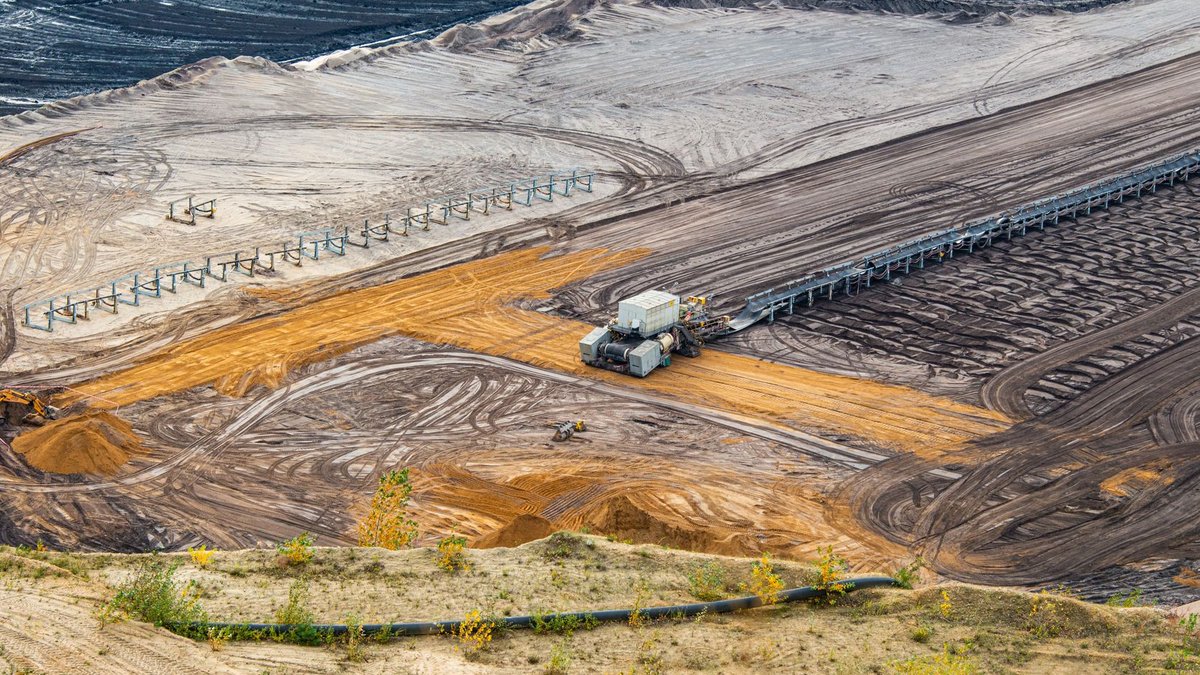
Bliss Mutale finishes his overnight shift at Mopani Copper Mines in Zambia’s Copperbelt. After a few years of suspended operations, the mine is back online under new Emirati ownership. This turnaround reflects a broader shift in the region, as copper prices hit record highs in London, surpassing $15,000 per tonne. Global demand for the metal is projected to rise significantly, driven by the growing need for electric vehicles and other transition technologies. S&P Global anticipates a surge from 28 million tonnes in 2025 to 42 million tonnes by 2040.
The President’s Ambitious Targets
This price surge presents an opportunity for President Hakainde Hichilema, who was sworn in for a second term in September. His administration aims to boost copper output to 3 million tonnes by 2031, a target outlined in his manifesto. However, current production levels tell a different story. Output rose from 800,000 tonnes in 2021 to just under 900,000 tonnes last year. PwC consultants estimate that even with all known and committed projects operating at full capacity, output would only reach about 1.8 million tonnes.
Meeting the president’s target would require nearly half of future production to come from new discoveries. Government projections assume copper can be found, approved, and brought to production within five to six years. The World Bank estimates that it takes at least twice as long for a mine to reach first production. Their analysts believe output might hit 1.5 million tonnes by 2031 and would not reach 3 million tonnes for another decade, and only if significant new reserves are found.
Finance Minister Situmbeko Musokotwane acknowledges the timing is a challenge but points to progress. He says the mining sector has moved past the chaos of the previous administration under Edgar Lungu. The minister notes that not only have collapsing companies been revived, but interest from new investors has also grown. Examples include a $1.25 billion investment by First Quantum Minerals to expand its Kansanshi mine and a $2 billion investment by Barrick Gold at Lumwana. Chinese and Emirati capital is also flowing into the sector.
Stability and Uncertainty
Sokwani Chilembo, chief executive of the Zambia Chamber of Mines, attributes some success to reforms made during Hichilema’s first term. Changes to mineral royalties reduced rates and allowed payments to be deducted from taxable income. Chilembo argues that a mining strategy requires multi-decade stable policy and regulations, a standard Zambia has not consistently met. He describes the current outlook as positive, driven by external prices and fiscal stability.
Anthony Mukutuma, country director for First Quantum Minerals, agrees that uncertainty has decreased. Gone are the days when mining companies would be “sitting at the edge of their seat” during budget speeches. He says the regulatory environment is now clearer. Despite these improvements, investment has not accelerated as quickly as hoped. A nationwide aerial survey is now underway to locate remaining copper deposits, as exploration was neglected for decades and many mining licences are held by speculators.
Another persistent challenge is electricity. Zambia relies heavily on hydroelectric dams, but a drought in 2024 cut household power to three hours a day. Mines were kept running by importing expensive electricity from other southern African countries. National generating capacity has risen from 3.1 gigawatts in 2021 to about 4.6 GW today, yet mines continue to import most of their power. This infrastructure gap remains a bottleneck for rapid expansion.
Although modern mining is capital-intensive, it generates relatively few jobs directly. The mining and quarrying sector as a whole employs around 90,000 people, which is approximately 2% of the workforce. To ensure that the benefits are shared, local content rules have been introduced, requiring mining companies to allocate a minimum of 20% of their core procurement to local providers, increasing to 40% after five years. Anthony Mukutuma of First Quantum believes this target is achievable, but he has concerns about the requirement for non-core goods to be sourced locally.
For local businesses to truly benefit, they must possess the capital and scale to compete with large multinational firms. Patience Mususa, a researcher at the Nordic Africa Institute, notes that while expertise exists, mobilizing capital to provide services at the scale required by mining operations is difficult. The rules will succeed only if they support genuine Zambian companies rather than front companies for foreign suppliers.
The debate over how Zambians benefit from the boom often centers on the state’s role. The government has considered increasing its stake in mining companies rather than pursuing full nationalization. ZCCM Investment Holdings, the state-owned investment company, wants to expand its minority shareholdings in the country’s largest mines. However, the president’s office has dampened proposed regulations that would have given the state a minimum 15% stake in mines, paid for from future profits.
The State’s Role and Future Outlook
The government has been indecisive about implementing production sharing, which would allow the state to directly own copper rather than just receiving revenue from its production. In 2024, a joint venture was established with Mercuria, a commodities trader, to trade Zambia’s metals, but there have been no updates on this initiative since. The Democratic Republic of Congo is already exploring this model through its state-owned mining company.
Production sharing has some advantages over taxation, argues Duncan Money, a historian and consultant who writes about copper mining. “The industry can find all kinds of ways to avoid tax,” he says. “If you have direct exposure to the metal, and there’s a boom or the prices are going up, you get the money right there.”
Some analysts suspect that tax avoidance is a significant issue in the mining sector, given the discrepancies in reported trade flows between Zambia and other countries. However, President Hakainde Hichilema appears more concerned that high taxes could deter investment. Following his tax reforms in 2023, the amount contributed by mining companies in royalties and profit taxes decreased by 2.1% of GDP, which was offset by an increase in VAT and excise taxes paid by the general population.
In March last year Hichilema flew to a lodge on the banks of the Zambezi for an exclusive forum with politicians, diplomats and mining magnates. Afterwards, they signed a statement they called “The Zambezi Minute”, outlining a vision for Zambia’s mining future. “Since investment drives production which in turn drives economic growth and job creation, to benefit from the contemporary critical minerals era, governments must possess a laser-like focus on raising production,” it argued. “With every piece of legislation and regulatory action, the following should be asked: Will this reduce risk and increase output?”
Hichilema’s supporters, including many in the mining industry, believe he has implemented sensible and business-friendly measures while avoiding the pitfalls of resource nationalism. There are also allegations that mining companies have secretly funded his campaigns, although both his party and the mining companies deny this.
What all can agree is that a sustained copper boom is an opportunity for Zambia: the question is how best to seize it.
Local Content and State Involvement
Modern, capital-intensive mining creates few direct jobs. The entire mining and quarrying sector employs about 90,000 people, or 2% of the country’s workforce. To spread the gains around, local content rules require mining companies to allocate at least 20% of their core procurement to local providers, rising to 40% after five years.


