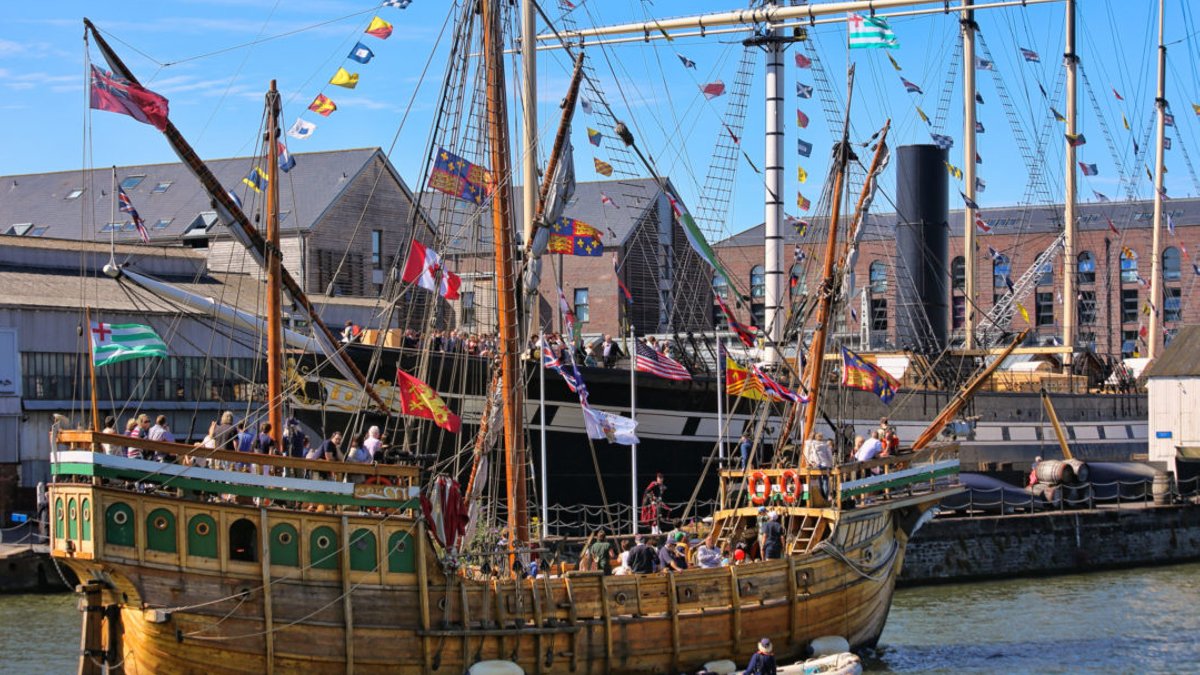
The trust that operates The Matthew of Bristol reported a loss of £25,000 in revenue for the 2025 financial year after a series of lock-gate failures repeatedly disrupted its scheduled cruises, cutting into the income that normally funds the vessel’s upkeep and associated programmes.
Revenue hit linked to lock-gate failures
Lock gates at the Plimsoll Bridge, the historic structure that separates the Floating Harbour from the Avon Gorge, failed to open on several occasions during the reporting period. Each failure prevented the replica ship from completing its advertised trips, forcing the trust to cancel voyages that had already been marketed to tourists and school groups.
The cancellations directly reduced ticket sales, accounting for the shortfall noted by the charity’s financial statements. The loss of ticket revenue therefore represents a tangible impact on the trust’s cash flow, given that ticket sales are the primary source of operating funds for the vessel.
Heat limits threaten future trips
In May, firefighters were called to the bridge to cool an overheating mechanism that could not be swung open, an incident that highlighted the vulnerability of the infrastructure to unusually high temperatures. The event showed how climate-related stress can quickly translate into operational disruptions for heritage attractions that rely on moving parts.
Read Also: Investors Eye Meme Coins for Altcoin Season Gains
Officials have now ruled that the bridge will remain closed whenever ambient temperature reaches 30 °C. That threshold was met on 40 days during the summer months, creating a pattern of closures that directly interferes with the trust’s ability to run its scheduled sailings.
Chair and treasurer Richard Sandwell warned that each trip could lose £2,000 if the heat-related closures continue, a figure that would compound the current deficit and place additional pressure on the organisation’s limited reserves.
He added that the organisation relies entirely on the harbour’s operational infrastructure, receiving no regular government subsidies or alternative income sources to offset the loss of ticket revenue.
Without a reliable opening mechanism, the charity cannot run its sailing tours, which are the sole means of generating the cash needed for vessel upkeep, crew wages, and the educational activities that accompany each voyage.
Read Also: New Disrupt Podcast spotlights Africa’s ed-tech sector
Trust seeks volunteers to stabilise finances
The board is recruiting two volunteer trustees: one to improve spending efficiency and another to explore new revenue streams, aiming to safeguard the ship’s future operations. These appointments are intended to bring fresh expertise to the trust’s financial planning and to help develop a more resilient funding model beyond ticket sales.
The volunteers will work alongside existing board members to review expense categories, identify potential cost-saving measures, and propose initiatives that could broaden the trust’s income base, such as corporate sponsorships or special event hosting.
Historical significance of the replica
Built in the late 1990s, the replica commemorated the 500th anniversary of the original 1497 voyage to Newfoundland, an expedition led by John Cabot that marked a key moment in early trans-Atlantic exploration.
In 1997 the modern vessel crossed the Atlantic, and it now serves as a popular landmark along Bristol’s waterfront, attracting visitors who are interested in maritime heritage and the story of early English voyages to the New World.


