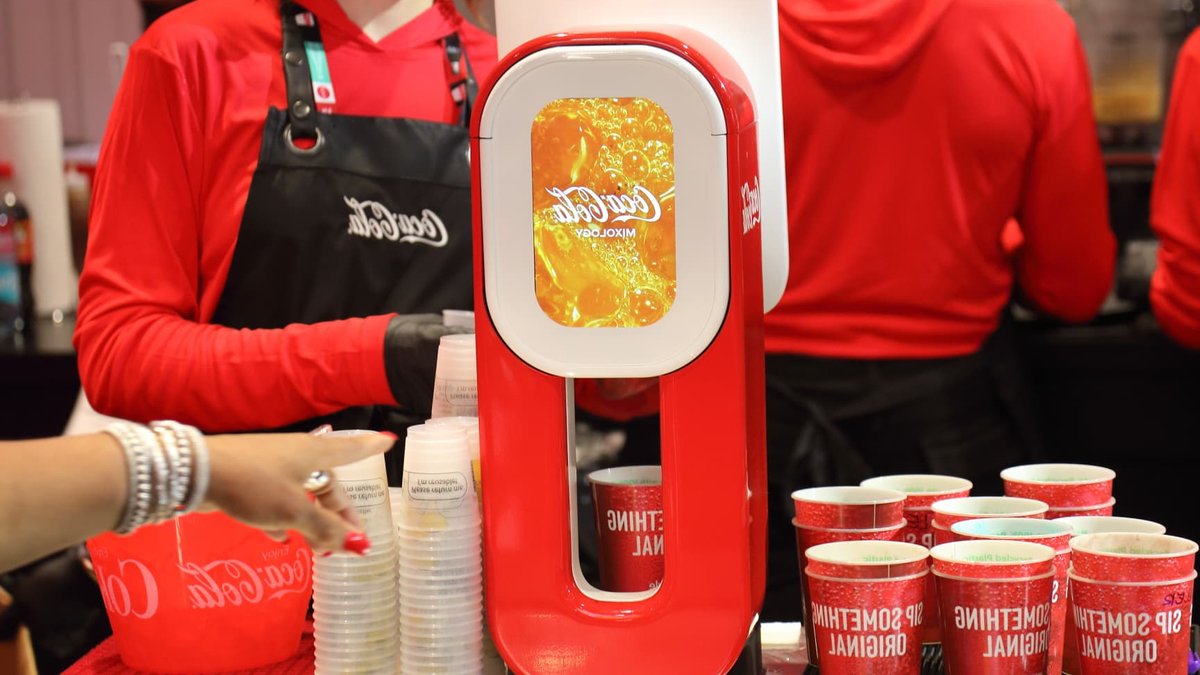
At its global headquarters in Atlanta, Coca-Cola is quietly developing new equipment designed to automate the creation of “dirty soda” and flavored refreshers. Tucked away in an anonymous office park, the company’s secretive labs are working on a flood of innovation. These efforts include a prototype that adds a dairy module to the classic Freestyle dispenser, allowing it to make the trendy, handcrafted drinks that have taken over quick-service restaurants. In partnership with AMC Theatres, it is testing a Micro Matic dispenser that can make brightly colored refreshers. And Coke has more white-label beverage options on the way, like an energy drink that can be customized by color and flavor.
Coca-Cola is still trying to evolve its flagship Freestyle dispenser, which celebrates its 17th anniversary this July. Even with its wide array of flavors, the machine faces stiff competition from specialty chains offering nearly unlimited customization. The company says the Freestyle has poured more than 67 billion servings since its introduction, and it uses real-time data from these machines to track trends.
Inside its Equipment Innovation Center, a massive television screen displays real-time data showing what drinks are trending at office buildings and hospitals. Insights from these dispensers help the company discover new grocery store products. For example, the data helped identify the popularity of a limited-time Coca-Cola Orange Cream combination, which mixes soda with vanilla and orange syrup.
Related: Early tests spot hidden diseases
Market research shows that beverage servings at restaurants now outpace food alone, a trend driven by consumer desire for more options. David Portalatin, senior vice president and food service industry advisor at Circana, told CNBC that these drinks often represent more than hydration. “Oftentimes these beverages are an opportunity to take a break, get some energy or protein, have a treat, at a lower price point,” Portalatin said.
Automating the Trend
Coke is taking aim at the “dirty soda” craze by creating a prototype that combines pop with flavored syrups, cream, or other ingredients. The company’s take on the trend comes with a preprogrammed recipe, offering less customization but eliminating mess. The prototype, which took roughly three weeks to create, keeps the recognizable drip down the sides of the cup, preserving the drink’s visual appeal.
Another area of focus is the “refresher” category. While Starbucks popularized the drink in 2012 to appeal to non-coffee drinkers, other chains like Panera Bread and Dunkin’ have since followed suit. Refreshers can now be found on 8.1% of menus at national restaurant chains. Coke’s director of dispensed innovation, Sarah Kate Sims, is working on defining what a refresher should be. To Sims, a refresher is a “healthier” beverage that delivers a pick-me-up without a traditional coffee caffeine base, using green tea or natural coffee extracts.
The company is also testing “mixology” dispensers to make iced coffee drinks. These machines represent a move beyond the standard soda gun found behind most bars. Coke has a long history of white-label beverages, having launched a premium lemonade more than a decade ago. That product is now sold by Wendy’s under the name “Dave’s Craft Lemonade” and by more than 40,000 other locations.
Related: BioMarin buys Alesta for 275 million dollars
Looking further ahead, Coca-Cola is developing a blank slate for handcrafted beverages: a colorless, relatively unflavored energy drink. The company plans to launch the beverage with food service operators in the first half of 2027. This move comes as the energy drink category, though smaller than sparkling soft drinks, offers the highest expected growth projections for the next decade.
Energy drinks have evolved from gas station staples to complex, lifestyle products. Truist analyst Matthew Greer notes that the conversation has widened the audience. “Starting with Celsius, the conversation around energy drinks has changed, widening their audience and the number of occasions where they can be consumed,” Greer said. Rather than just a pick-me-up, energy drinks are now becoming part of workout routines. Coke’s version will be designed to be served by employees to “limit consumption,” according to vice president of dispensed equipment Megan Tallman. A 12-ounce serving contains 106 milligrams of caffeine, roughly the same as a Red Bull and half that of a Celsius can.
Balancing the Menu
The push for customizable drinks is driven by customer demand. Melinda Pritchett, director of innovation for North America, notes that inquiries from food service partners are increasing. “If you’re looking at what McDonald’s is doing with the handcrafted beverages, all our customers are saying, ‘We should be in that as well,'” Pritchett said.
Related: Small firms find new sales avenues
McDonald’s has been a major driver of this trend, expanding its McCafe menu to include refreshers and crafted sodas. The company reported that drink sales are ahead of plan and that guest checks are higher. However, the beverage launches arrived during a quarter where McDonald’s U.S. same-store sales grew by just 0.8%. The company has replaced its U.S. president in an effort to accelerate its domestic division.
On Monday, McDonald’s further expanded its beverage options with the Red Bull Dragonberry Energizer, partnering with a competitor rather than using a Coke-affiliated brand like Monster. Coke CEO Henrique Braun addressed the relationship during an earnings call, stating that the partnership with McDonald’s remains intact. “We have a fantastic and very long-standing partnership with McDonald’s, and that’s intact, right?” Braun said. “We continue to be very happy with that partnership.”
Ultimately, the success of these new products relies on whether they drive incremental volume. When testing a new beverage, Coke tracks metrics like whether a customer buys the item even if they wouldn’t otherwise purchase a drink. A survey of McDonald’s franchisees found that more than half believe the specialty drinks are performing in line with expectations. One franchisee noted that the items are selling well, but most sales are a trade-off from other beverages rather than new transactions.


