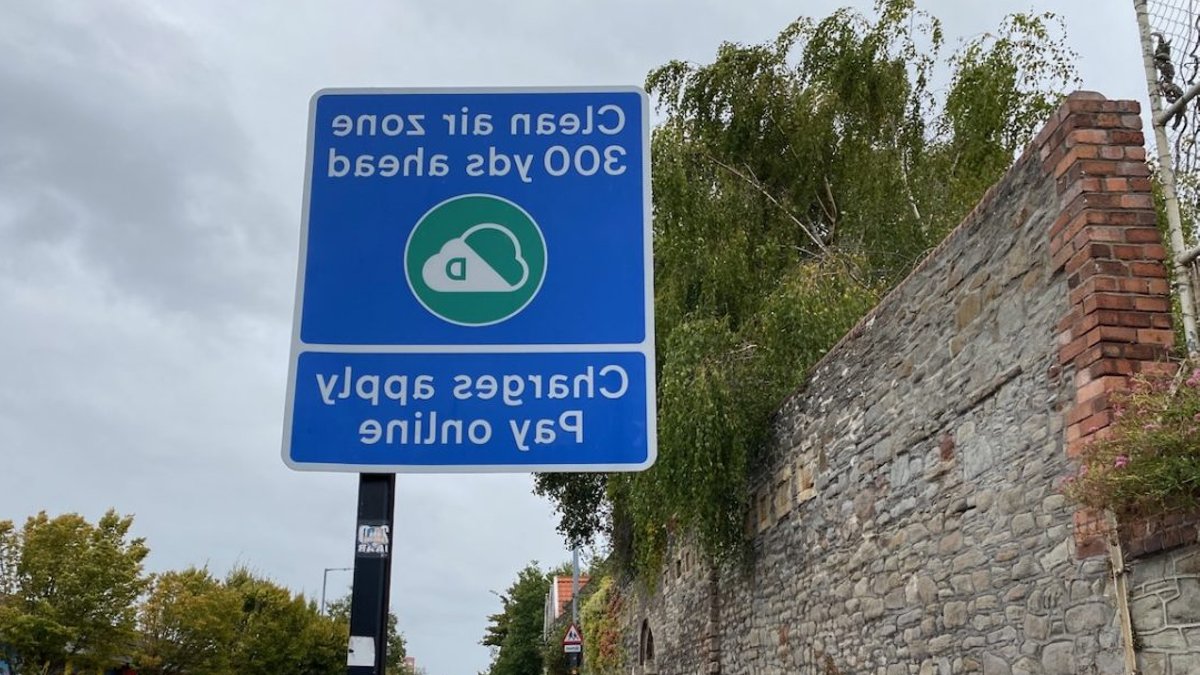
Bristol’s nitrogen dioxide levels rose in 2024–2025 despite the city’s Clean Air Zone, with nine monitoring sites now recording illegal concentrations—up from six before. The increase of 2.4% contrasts with the 16% reduction achieved since the zone launched in November 2022, although the current readings still sit below the levels recorded before the scheme began. This pattern shows that while the overall trajectory is positive, short-term spikes can still occur. The Clean Air Zone, introduced in 2022, targets nitrogen dioxide, a pollutant linked to several diseases, making its reduction a key public health priority.
Bristol City Council attributes the rise to weather patterns rather than traffic or roadworks. Wind and rain normally disperse pollutants, but calm conditions trap nitrogen dioxide near the ground, worsening air quality. The city’s monitoring network highlights illegal levels at College Green, Colston Avenue, Rupert Street, Old Market Roundabout, Anchor Road, and Bond Street. Anchor Road recorded the sharpest increase after months of disruptive roadworks, a detail that shows how local works can amplify the effect of stagnant air. In 2024, the site was still below the legal limit of 40 micrograms per cubic metre.
Read Also: Bristol boosts film and TV sector with £4.5m grant scheme
Councillor Abi Finch, chair of the environment policy committee, noted that pollution depends on more than vehicle numbers, speed, traffic flow, and road design also play a role. Meanwhile, the national trend mirrors Bristol’s: nitrogen dioxide levels rose 3% across England without a corresponding traffic increase, suggesting that local factors alone aren’t to blame. Finch also pointed out that nearby buildings and road gradients can create microclimates where pollutants linger, further complicating efforts to pinpoint causes.
While the Clean Air Zone has generated millions in fines and charges to fund sustainable transport, including new bus routes, campaigners argue deeper action is needed. Three councillors recently met with Clean Air for Kids, a group pushing for CO₂ monitors, air filters, and better ventilation in schools. Founder Ruth Brooker, whose son was diagnosed with cancer, called for portable filters to cut indoor pollution risks, saying they harm children’s health and attendance. Their appeal reflects growing concern that indoor environments can amplify the impact of outdoor spikes. The organisation’s push for CO₂ monitoring also addresses the broader issue of indoor air quality, which can be influenced by poor ventilation.


