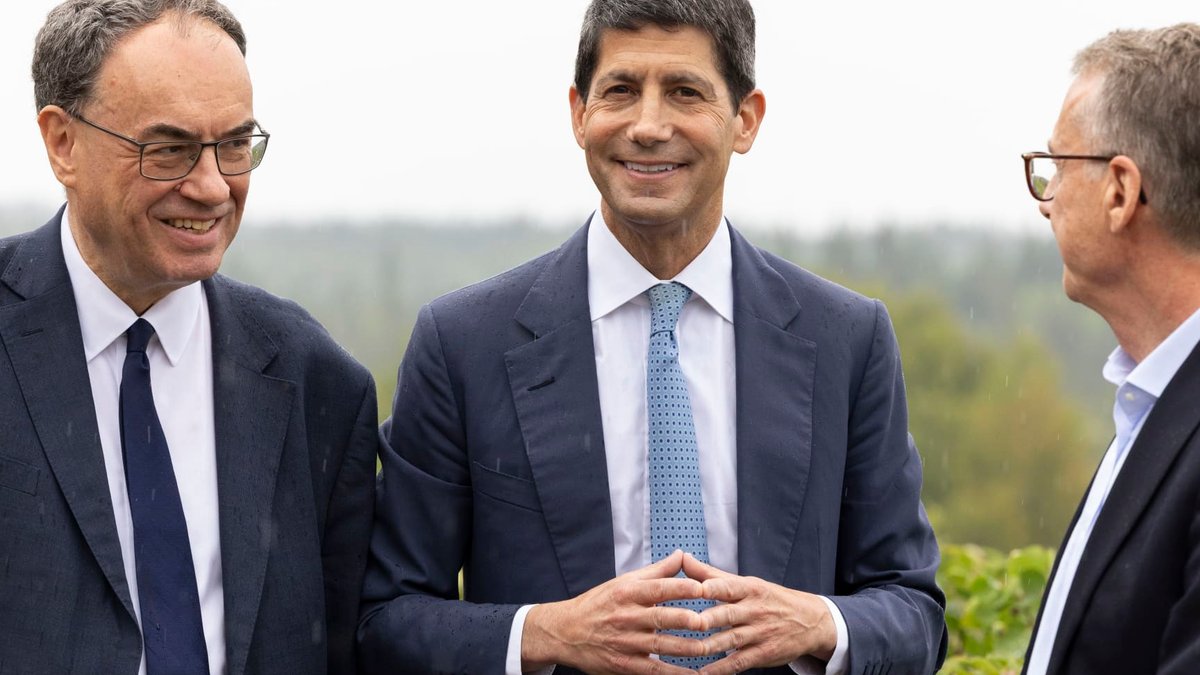
Federal Reserve Chair Kevin Warsh’s speech at the Jackson Hole symposium sent markets tumbling Monday as traders reassessed the likelihood of an interest rate increase next month. The remarks, described by analysts as unexpectedly hawkish, pushed gold lower and weighed on Asian equities while lifting expectations for a September hike.
Rate Hike Odds Climb
Traders of fed funds futures now see a 60.4% chance of a quarter-point increase in September, up from roughly 56% on Friday, according to the CME’s FedWatch tool. The shift reflects a sudden recalibration in market thinking following Warsh’s address to central bankers and economists gathered in Wyoming.
Deutsche Bank said the speech “surprised us in its specificity about the economy and outlook and with its lean in a decidedly hawkish direction.” The firm continues to forecast a 50 basis point total increase this year, split between September and December Federal Open Market Committee meetings.
Related: China Floods Market with Low Budget Dramas
Focus on Inflation Data
Analysts at UOB noted Warsh’s “reluctance to pre-commit to future policy actions” while emphasizing inflation risks. The bank said this reinforces raised risks of tightening, though it acknowledged the remarks could amount to “talking without action.”
Nomura pointed to what it called high sensitivity to near-term inflation data. “Warsh delivered hawkish remarks at the Jackson Hole economic symposium, emphasizing the importance of the inflation target and implying policy may need to react if disinflation is not occurring with speed,” the firm said in a note.
For businesses and households still adjusting to higher borrowing costs, the distinction between rhetoric and actual policy matters enormously. If Warsh follows through on even a fraction of what he signaled, the next few months could bring the most aggressive tightening since the current cycle began—regardless of what the economic data ultimately shows.
James Ooi, a market strategist at Tiger Brokers, said Warsh’s assessment that U.S. economic performance has been robust “was seen as reducing the case for near-term rate cuts.” His emphasis on the 2% inflation target could be read as an effort to reinforce the Fed’s independence and credibility, reassuring markets that monetary policy will not bend to fiscal pressures.
Related: Rising Yields Rattle Market, but AI and Retail Stocks Shine
Treasury Tensions
Not all analysts are convinced a hike is imminent. Matthew J. Maley, chief market strategist at Miller Tabak, said “there remains no empirical basis for the rate hike.” He argued Warsh appears to be “talking up inflation so that he can claim credit for taming it when headline measures inevitably come down,” pointing to weak labor market data alongside better-than-expected inflation readings since the last FOMC meeting.
Gavekal Research flagged a separate tension in Warsh’s remarks. His reiteration that short-term interest rates should remain the main instrument of monetary policy implies he will continue shortening the average duration of the Fed’s balance sheet. “This seems to put the Fed at odds with the US Treasury, which earlier in August announced that it will step up its buybacks of long-term Treasury securities in an apparent attempt to prevent yields rising further at the long end,” the firm said.
Gold Feels the Pressure
Precious metals bore the brunt of the shift in sentiment. Susquehanna noted that Warsh pledged to return inflation to the 2% target and indicated rates could rise further, “strengthening the dollar and reversing part of the debasement trade that had lifted gold roughly 14% in August—its strongest monthly gain this century.”
