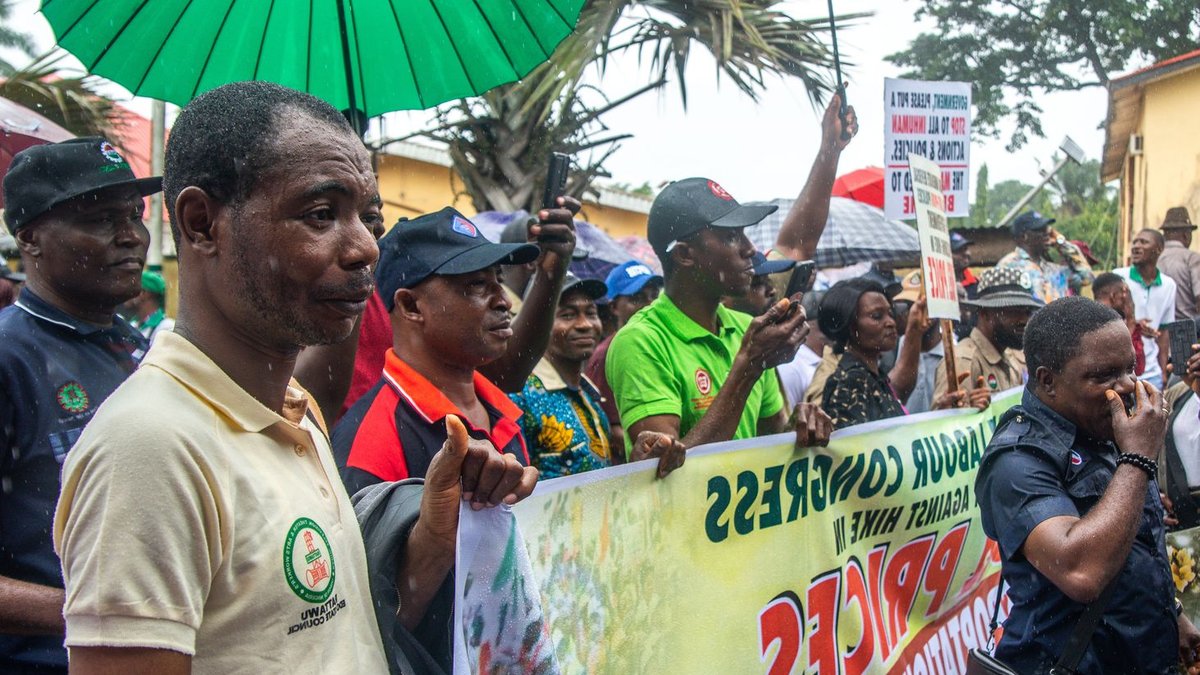
Nigerians will head to the polls on January 16, 2027, to elect the next president of Africa’s most populous nation. Incumbent President Bola Tinubu of the All Progressives Congress (APC) is seeking a second term, citing his record of economic reform. However, the opposition, led by Atiku Abubakar of the People’s Democratic Party and Peter Obi of the Nigeria Democratic Congress (NDC), is strong and divided.
Tinubu’s four years in office have been marked by radical financial and fiscal reforms, including the scrapping of fuel subsidies and the revaluation of the naira. The government claims these reforms are working and have returned credibility to the economy, but the opposition argues that the benefits have not trickled down to most Nigerians.
To gauge the mood of the electorate, a survey was conducted in Lagos, asking ordinary Nigerians to rate the Tinubu administration on a scale of 1 to 100. One respondent rated the government at 60%, citing the increase in the minimum wage as a positive development. However, they also noted that the cost of living has risen significantly, making it difficult for people to make ends meet.
Another respondent, Taiwo Oluwakemi, a shop assistant, rated Tinubu at 90%, praising his efforts to construct roads, fight Boko Haram, and provide constant electricity. In contrast, Oluwakemisola Oyegbade, also a shop assistant, gave Tinubu a rating of 50%, stating that while he is trying his best, there is still much to be done to address the lack of jobs and economic opportunities.
Josephine Oworu, a market woman, rated Tinubu at 70%, describing him as a “nice man” who has helped people in need. She expressed hope that he would be re-elected and continue to support market women like herself. ‘Coach’ Oruagbo, a football coach, gave Tinubu a rating of 50%, citing the high cost of fuel and the lack of economic opportunities as major concerns.
Shadrach Enike, from Imo state, rated Tinubu at 75%, praising his handling of the country and his efforts to meet the expectations of Nigerians.
The survey highlights the diverse opinions and concerns of Nigerian voters, with some praising Tinubu’s efforts to reform the economy and others criticizing the lack of progress in addressing poverty and inequality.
A closer look at the survey results reveals that many respondents are struggling to make ends meet, with the cost of living rising significantly over the past four years. The issue of job creation and economic opportunities is also a major concern, with many young people feeling that they have been left behind by the current administration.


