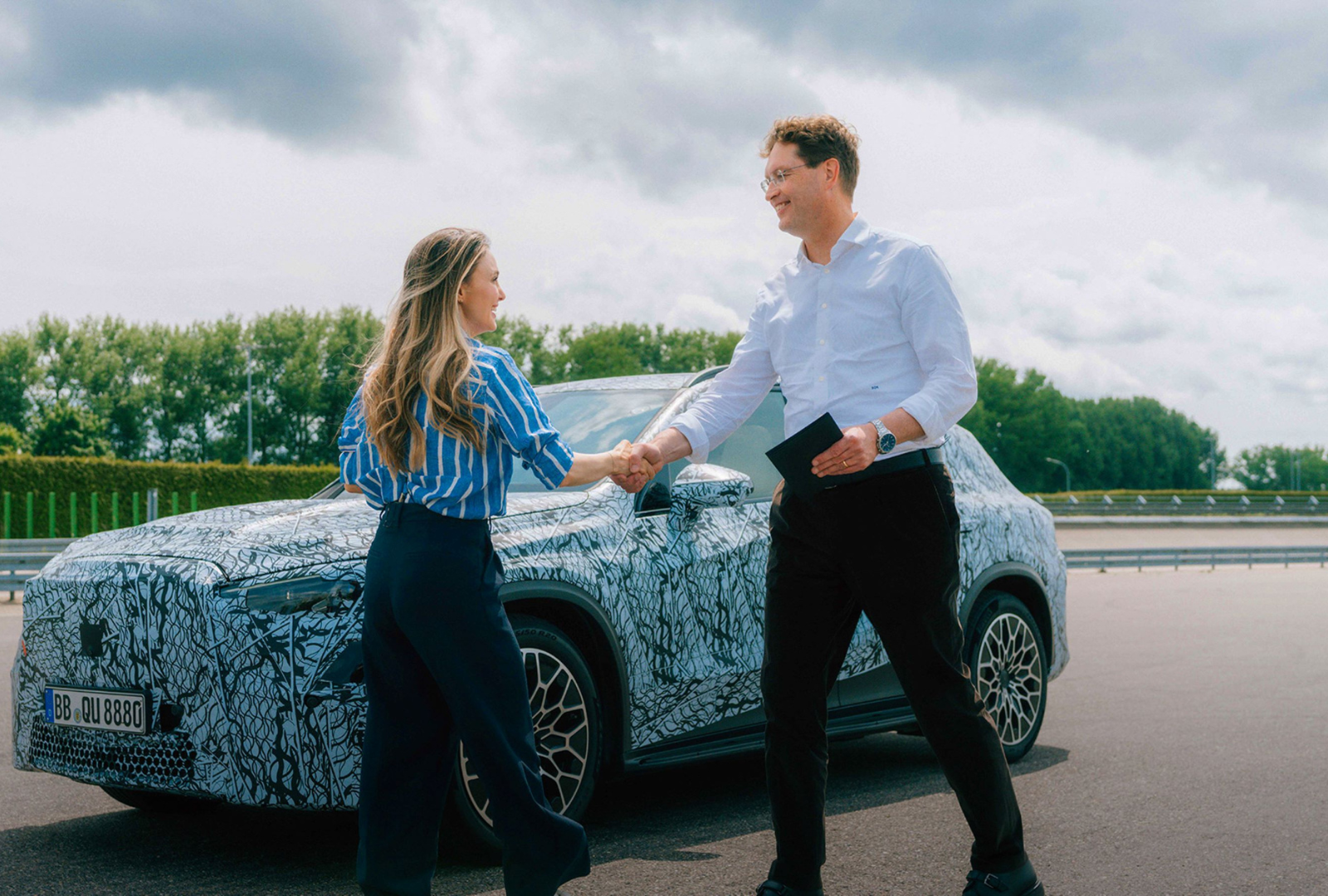
In a climate marked by economic ambiguity and shifting consumer sentiment, boldness is not merely a strategy—it is a necessity. The declaration that “Mercedes U.S. CEO sets ambitious sales goal despite ‘tougher’ market than anticipated” encapsulates a paradox at the heart of today’s automotive industry: resilience amid resistance, expansion amid uncertainty.
At the center of this narrative is a calculated gamble. While macroeconomic headwinds gather force, Mercedes-Benz is not retreating. It is accelerating.
A Market Defined by Friction
The early months of 2026 have delivered an unanticipated dose of complexity. Consumer confidence, though not entirely eroded, appears increasingly tentative. Elevated auto loan interest rates have reshaped purchasing behavior, subtly discouraging impulse decisions and extending buying cycles.
Layered atop this financial hesitancy is a broader geopolitical unease. Global tensions, fluctuating commodity prices, and policy unpredictability have created an वातावरण of persistent distraction. These are not isolated variables; they are interwoven pressures influencing consumer psychology.
Short pauses. Longer deliberations.
Even affluent buyers—historically insulated from economic tremors—are demonstrating a more measured approach. Luxury, once an instinctive purchase, is becoming a considered investment.
Fuel Prices and Psychological Thresholds
Fuel costs, while not yet a definitive deterrent, are emerging as a latent concern. Gasoline prices hovering above $4 per gallon may be tolerable in the short term. However, sustained increases toward the $5 threshold could introduce a perceptual shift.
Not necessarily a collapse in demand. But a recalibration.
Luxury vehicles, particularly performance-oriented models, often carry implicit assumptions about fuel consumption. When fuel prices rise, even marginally, they challenge those assumptions. The result is not immediate disengagement—but growing hesitation.
A subtle erosion of urgency.
Tariffs, Costs, and Strategic Absorption
Complicating the equation further are tariffs on imported vehicles. As a global manufacturer with a significant portion of its U.S. inventory produced overseas, Mercedes-Benz faces inherent exposure to these trade policies.
Yet the company’s response has been notably restrained.
Price increases have remained minimal—just over one percent—despite broader inflationary pressures. This is not incidental. It is a deliberate attempt to preserve demand elasticity, ensuring that price sensitivity does not undermine sales momentum.
Margins, inevitably, absorb the strain.
Such a strategy reflects a long-term orientation. Short-term profitability may be compressed, but market share—once lost—is far more difficult to reclaim.
Manufacturing as a Strategic Lever
Amid these challenges, investment becomes both shield and sword. Mercedes-Benz’s commitment of $4 billion to its Alabama manufacturing plant signals more than expansion—it signifies recalibration.
Localization is no longer optional. It is imperative.
By increasing domestic production capacity, the company aims to mitigate tariff exposure while enhancing supply chain resilience. The Alabama facility, already a cornerstone of Mercedes’ U.S. operations, is poised to become even more integral.
Production scale. Operational agility.
These are the levers through which the company intends to navigate an increasingly protectionist global trade environment.
Ambition Anchored in Numbers
The aspiration is unequivocal: a 28% increase in U.S. sales by the end of the decade. From approximately 303,000 vehicles sold last year to a targeted 400,000 annually by 2030.
Ambitious? Undoubtedly.
Unrealistic? Not necessarily.
The luxury automotive segment, while sensitive to macroeconomic fluctuations, retains a core demographic with substantial purchasing power. Moreover, brand equity plays a pivotal role. Mercedes-Benz is not merely selling vehicles; it is offering an identity—one rooted in engineering excellence and aspirational prestige.
That identity, when leveraged effectively, can transcend temporary market constraints.
Product Innovation as Catalyst
To support its growth trajectory, Mercedes-Benz is expanding its product portfolio with renewed vigor. Updated versions of its flagship SUVs—the GLS and GLE—are emblematic of this approach. These models, already popular among American consumers, are being refined to align with evolving preferences.
Notably, the introduction of hybrid variants reflects a nuanced understanding of the market. Electrification is no longer a binary transition. It is a spectrum.
Hybrids occupy a strategic middle ground—offering improved efficiency without the infrastructural dependencies of fully electric vehicles. For many consumers, they represent a pragmatic compromise.
Innovation, in this context, is not radical disruption. It is calculated evolution.
The Psychology of Luxury in Uncertain Times
Luxury consumption behaves differently during economic uncertainty. It does not vanish. It adapts.
Buyers become more discerning. They seek value—not necessarily in price, but in experience, craftsmanship, and brand assurance. Mercedes-Benz, with its longstanding reputation, is well-positioned to meet these expectations.
However, the margin for error narrows.
Every product must justify its existence. Every feature must resonate. Excess is no longer sufficient; it must be purposeful.
Conclusion: Confidence as Strategy
The assertion that “Mercedes U.S. CEO sets ambitious sales goal despite ‘tougher’ market than anticipated” is more than a headline—it is a strategic posture. It reflects a belief that adversity, while inevitable, is navigable through precision, investment, and brand strength.
Markets will fluctuate. External pressures will persist.
But ambition, when grounded in calculated execution, can serve as a counterbalance to uncertainty. Mercedes-Benz is not ignoring the challenges ahead. It is confronting them—with capital, with innovation, and with an unwavering commitment to growth.
In a “tougher” market, confidence becomes currency.